Last updated: September 2026· Gonzalo Rojas Benavidses, Founding Partner, Colegio de Abogados de Costa Rica No. 17310
---------------------------------------------------------------------------
Costa Rica has no title insurance. No insurer stands behind a title defect discovered after closing, which means due diligence is not a step in the purchase — it is the buyer's only protection.
That fact changes who you need in the transaction. A real estate agent, the notary executing the transfer and a lender's attorney each perform a defined role, and none of them constitutes the independent legal review a buyer requires.
A beachfront condominium, a hillside home and a rural lot may appeal to the same buyer, but each raises different questions about ownership, access, water, construction and rental use. This guide sets out what those questions are, how the purchase works stage by stage, and what a seller should resolve before listing.
What kind of market is Playa Sámara?
Sámara sits between the high-volume tourism market of Jacó and the more exclusive luxury markets farther north. Playa Sámara attracts families, retirees, vacation-home buyers, and rental investors, with options ranging from properties that are relatively affordable compared with other coastal markets to high-end homes in a relaxed beach community.
Three characteristics define it: a protected bay, an established international community and development that remains horizontal and low density.
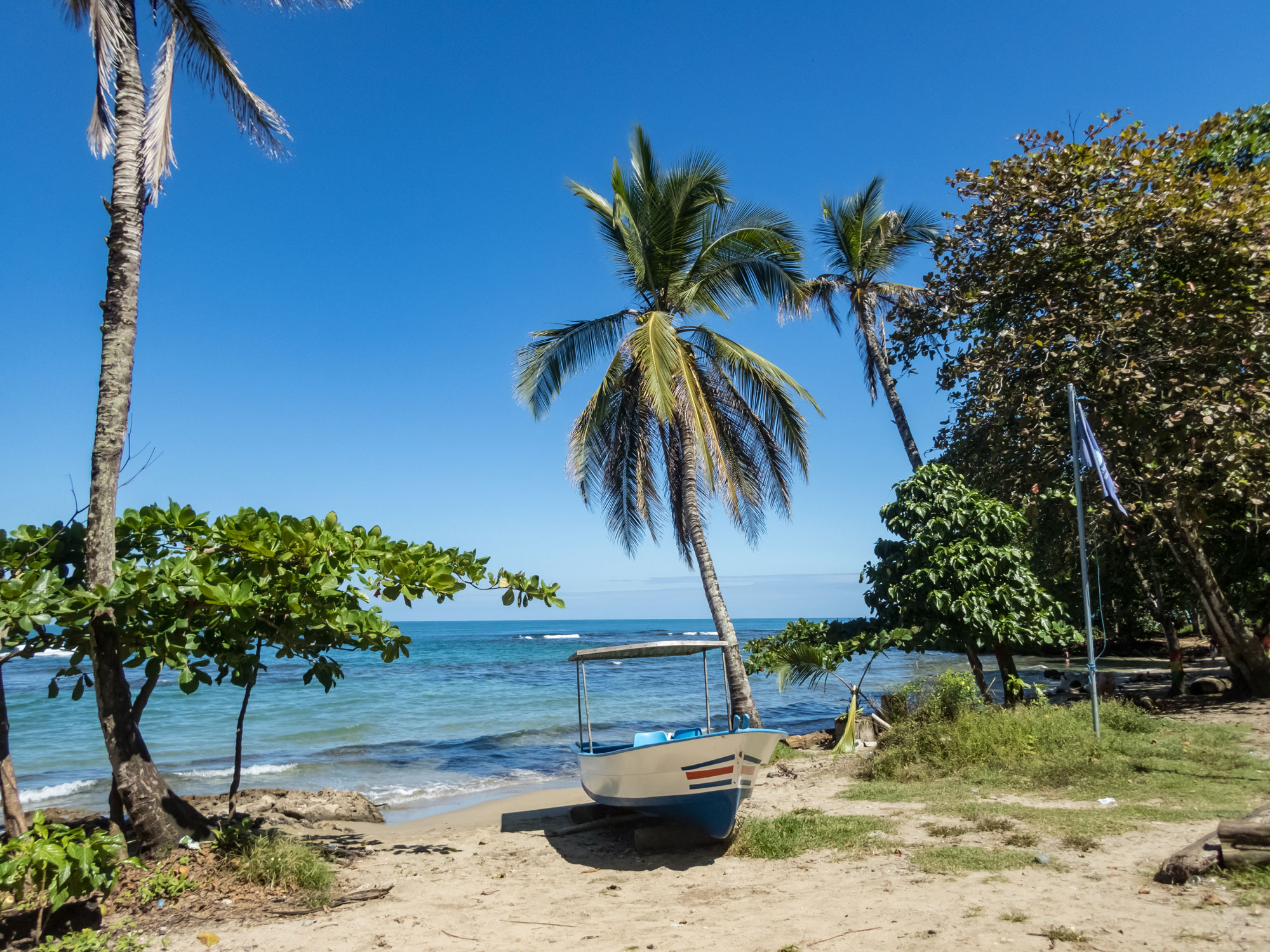
The beach is a semi-enclosed bay approximately four kilometres long, protected by a coral reef at its northern end. Its moderate surf and suitability for swimming help explain its appeal to families and distinguish it from destinations where demand centres on surfing.
The community is multinational. United States and Canadian Citizens make up the largest foreign group, alongside a European population established since the 1990s and a growing segment of high-net-worth buyers from Latin America.
The absence of vertical construction is the third defining feature. Buyers value it, and developers increasingly weigh how it constrains future projects. Market context is useful background, but the legal assessment still has to address the particular property and its intended use.
Who is buying property in Sámara, and what does each buyer need?
Three profiles are especially relevant, and each brings different legal priorities.
| Profile | Typical age | What the legal work has to cover |
| Retiree buying a primary or second home | 55 – 75 | Residency, the ownership structure, and succession arrangements including a Costa Rican will |
| Vacation rental investor | 35 – 55 | Short-term rental licensing, tax registration, corporate structure and management contracts, alongside the property itself |
| Digital nomad becoming a resident | Late 20s – mid 40s | Often a first property purchased outside the home country and more likely to involve financing. Understanding the transaction process and obtaining independent representation matter most here |
Does it matter where in Sámara you buy?
Yes. Sámara is small, but its market contains four distinct areas, and the legal work differs in each as much as the price does.
| Area | What you find there | What the review has to check |
| Town centre and beachfront | Highest price per square metre and highest rental yields in the local market. Smaller lots, condominiums and compact houses | Condominium regime documents, homeowners association administration, and whether the property holds the licensing required for short-term rental |
| Hills and ridges above town | Strongest appreciation of the past five years and most of the new construction. Larger lots, ocean views, homes with pools | Registered access, water availability and construction permits. These determine whether a view lot can be developed or a completed home used as intended |
| Carrillo, ~7 km south | Transition market with larger lots at lower prices. Buying land and building is the common strategy | Permits, construction contracts and potential disputes with builders — addressed while the project is being planned, not after |
| Interior toward Buena Vista | Entry-level rural property, partial or no ocean view, road access still improving. Five to ten year horizon | Registered legal access and water. Both must be resolved before relying on the property's future potential |
Why do water and legal access deserve particular attention?
Because they are the two constraints that cannot be negotiated after closing. A physical road does not establish a registered right of way, and a letter from a neighbour is not a water concession.
A buyer needs the legal basis for reaching the property, not the route used during a viewing. The same applies to water: an informal arrangement is not confirmation that the property has the rights or availability its intended use requires.
Verified before signing, both are ordinary checks. Verified after closing, the buyer owns a property whose practical use depends on issues that remain unresolved.
Who represents whom in a Costa Rican property transaction?
Each professional in the transaction is contractually aligned with someone. Establishing who that is, for each of them, is what tells a buyer where their own legal review fits.
Are real estate agents licensed in Costa Rica?
There is no mandatory professional licensing for real estate agents in Costa Rica. The title by itself establishes nothing about a person's experience or qualifications.
There are experienced agents working in this market, and they should be assessed on concrete criteria: a confirmed physical presence in the area, documented experience with foreign buyers, and membership in the national real estate chamber or an established international network.
Representation arrangements also vary. Each party may have its own agent, or one agent may be involved with both sides. The commission is paid from the sale, and the relationship often begins with the listing. Before relying on an agent's advice, understand the scope of their role and whose interests they are contractually representing.
What does the notary do, and what does the notary not do?
The notary drafts the sale instrument, incorporates it into the notarial protocol and registers it. That function is not an engagement to investigate whether the property suits the buyer's plans.
The presence of a notary does not, by itself, establish that anyone has performed the buyer's due diligence. The same distinction applies to financing: the lender's attorney represents the lender and examines the transaction from that perspective.
Buyers and sellers therefore each need their own representation to review the transaction in light of their respective interests.
What should I look for in a real estate attorney?
Four criteria, none of which is the ability to prepare a deed:
- A practice dedicated to real estate transactions rather than a general practice
- Documented experience with international buyers
- Working fluency in your language, so you can make informed decisions about documents written in Spanish
- A standardized, documented process covering the transaction from preparation through post-closing work
Ask what that process includes, whether it changes with the size of the transaction, and when you will receive a preliminary closing statement. You should also understand which tasks continue after registration and who is responsible for them.
How does buying property in Sámara work?
A purchase divides into three stages: pre-closing, closing and post-closing. Each addresses a different part of the buyer's position, from protecting funds and investigating the property to registering ownership and completing the obligations that follow.
Our practice is organized around those three stages, with four components in the pre-closing phase: establishing escrow, conducting due diligence, setting up the holding vehicle, and preparing a preliminary closing statement tailored to the transaction.
How does escrow work, and why does it come first?
Once an offer is accepted, funds are placed with an escrow agent under the agreed terms. Domestic escrow agents in Costa Rica must be registered with SUGEF, the financial superintendency.
The buyer signs an escrow agreement and provides identification, know-your-customer documentation and proof of the source of funds. The purpose is to keep money from changing hands before the contractual conditions are met.
Escrow needs to be understood early, because the movement of funds has to be coordinated with the purchase agreement, the legal review and the closing instructions.
What does legal due diligence cover?
Due diligence examines the property's legal position and whether it supports the proposed use. Its scope:
| Area | What is verified |
| Title | Ownership records, liens, mortgages, annotations and easements at the National Registry |
| Tax status | Territorial and municipal taxes, together with luxury tax where applicable |
| Zoning and land use | Whether the intended activity is permitted |
| Construction records | Plans, building permits and survey inspection |
| Access and utilities | Registered legal access and the legal basis for water and electricity |
| Rental activity | Analysis of existing or proposed rental operations |
| Coastal status | Verification of Maritime-Terrestrial Zone status where relevant |
An incomplete review can leave the buyer with encumbrances, municipal debt, environmental restrictions, zoning problems or unpermitted construction. There is no insurer to call afterwards.
What happens if due diligence identifies a problem?
The purchase agreement should establish a defined due diligence period. Within that period the agreed terms can allow the buyer to renegotiate, require remediation, or withdraw with the deposit returned.
The timing is what matters. Identifying an issue while the contractual review period remains open gives the buyer options that are no longer available after closing.
Should I hold the property through a company?
A property may be acquired through a special purpose company formed to hold it. The reasons are separation of assets, remote management, succession planning and, in some cases, tax treatment. A company can act through a power of attorney, which lets an owner handle matters without travelling to Costa Rica for each action.
This decision belongs before the purchase. Changing how the property is held after registration can require a second transfer, with the costs that implies.
The company itself creates continuing obligations. Corporate books, annual requirements and beneficial ownership filings form part of its compliance calendar from the first day of ownership. Owners living abroad forget these more often than any other duty, and the omission surfaces when the property is later offered for sale.
How do I know the full closing cost before I commit?
Through a preliminary closing statement: a detailed account of the costs associated with the transaction, prepared at the start of the process rather than at the end, so the buyer sees the full amount before becoming committed.
The statement should be tailored to the transaction, so the parties understand the expected payments and adjustments before they reach the closing table.
What happens at closing?
The parties settle the figures and execute the transfer documents and disbursement instructions. The transfer deed is executed before a notary public, incorporated into the notarial protocol and submitted for registration at the National Registry. Registration takes approximately ten business days.
The settlement accounts for the purchase price, legal fees, broker commission, credits, holdbacks and applicable transfer costs. Transfer tax and Registry stamps together are approximately 2.4% of the higher of the fiscal value or the sale price. That combined figure should not be confused with the transfer tax alone, nor treated as the complete cost of the transaction.
What still has to be done after registration?
Registration completes the transfer of ownership. Several practical and legal tasks may remain, depending on the property and the buyer's plans:
- Transferring utilities into the new owner's name
- Arranging property insurance
- Completing luxury tax appraisal and compliance where applicable
- Registering as a taxpayer if the property will generate income
- Addressing short-term rental licensing
- Opening a corporate bank account
- Applying for investor residency if the purchase qualifies
- Preparing a Costa Rican will
Planning these alongside the purchase connects the registered ownership with the way the buyer intends to live in, manage or rent the property.
What changes when the purchase is financed?
Credit approval is not due diligence. The lender's lawyer represents the lender and assesses whether the property is acceptable collateral — nothing more.
That review does not establish that zoning permits the buyer's intended use, that the homeowners association is well administered, or that the purchase agreement protects the buyer's interests. Financing also adds a disbursement schedule that has to be coordinated with escrow and closing.
In a financed transaction the buyer's attorney coordinates and performs the buyer's due diligence assessment while reviewing the sale and purchase documents, the transfer deed, the financing documents, any trust instruments and the escrow instructions. The work includes coordinating disbursement timing among the escrow agent, lender and parties, verifying that the down payment is in escrow before closing, and managing a closing that depends on the lender's release of funds.
The seller needs independent representation for the same reason. The fact that the buyer and the lender have counsel does not mean either attorney is reviewing the transaction on the seller's behalf.
What should a seller do before listing?
Resolve the property's legal and tax position before the buyer's attorney begins examining it, not during the negotiation.
A buyer's attorney may request extensive records, examine tax positions, arrange technical inspections and seek changes to the agreement if inconsistencies appear. Entering that process unprepared means assembling documents and resolving issues while negotiating the sale — from behind.
How does capital gains tax affect the timing of a sale?
The general rate is 15% of the gain, subject to filing requirements and possible exemptions. A transitional regime applies to property acquired before 2019 and can materially change the calculation.
The assessment also considers whether the property was held as a business asset, whether the holding company maintains formal accounting, and when the property was acquired. Discovering the tax position during the transaction affects the seller's expectations and the terms they are prepared to accept.
What can a pre-listing legal review accomplish?
It decides who finds the problem first. If the buyer's attorney discovers an issue during due diligence, it becomes a basis for renegotiating the price or withdrawing. If the seller identifies it first, there is an opportunity to resolve it, or to disclose it with context and a proposed solution.
The review is particularly relevant for luxury properties, owners selling remotely, rental properties with an income history, beachfront and rural properties, and properties held through companies. It matters most when the intended buyers are international purchasers likely to conduct a detailed legal review.
What do these services cost?
| Service | Fee | Expenses / notes |
| Buyer representation — cash purchase* | Approximately 1.2% of the transaction value | Approximately 2.5% of the transaction value |
| Buyer representation — financed purchase ** | 0.75% of the purchase price + VAT | US$145 in expenses |
| Pre-listing legal review ** | US$750 + tax | US$145 in expenses |
| Full seller representation ** | 0.45% of the sale price + VAT | Covers the scope listed below |
*These percentages are established by law.
** These percentages are estimates established by Quatro Legal for pricing purposes and may vary slightly depending on the transaction value and specific circumstances.
Full seller representation covers:
- Negotiation and review of the purchase agreement
- Capital gains guidance
- Escrow supervision, including confirmation that the buyer's funds are in escrow before closing
- Gathering documents from the municipality, tax authority, water utility, Registry and social security authorities
- Notarial documentation, including powers of attorney when the seller cannot attend
- Review of the closing deed prepared by the buyer's attorney
- Post-closing follow-through on holdbacks
What should I settle before making an offer?
Four things, and all of them before the offer rather than after: who represents you, what the due diligence will cover, how the property will be held, and what the closing and post-closing obligations will be.
A retiree purchasing a home, an investor acquiring a vacation rental and a buyer financing a first property abroad do not need the same structure or the same supporting arrangements. Location adds another layer: a condominium in town requires a different emphasis from a hillside lot or a property toward Buena Vista.
If you are selling, make the same assessment before listing, while there is still time to resolve issues and understand the tax position.
Settled early, these questions are ordinary preparation. Settled late, they become negotiating leverage for the other side.
---------------------------------------------------------------------------
This article describes general procedures in Costa Rican real estate transactions and does not constitute legal, tax or investment advice. Rates, thresholds and market conditions may change, and every property is different. Have the specific transaction reviewed before committing funds.


Disclaimer: The information provided in this resource is for general informational purposes only and is not intended to constitute legal advice. While we strive to ensure the accuracy and timeliness of the content, laws and regulations are subject to change. For the most accurate and up-to-date information, please contact our office directly. Some images may be AI generated.