Last updated: October 01 2027 · Maria Jose Mathus, Immigration Specialist.
---------------------------------------------------------------------------
Five immigration options are relevant to someone moving to Puerto Viejo, Cocles, Punta Uva or Manzanillo: investor through real estate, investor through company shares, rentista, pensionado and digital nomad. Which one fits is determined by where your income or investment comes from, not by how much money you have.
None of the five authorizes employment with a Costa Rican employer while residence remains temporary. Anyone planning to rely on local work needs to resolve that question before moving, not after.
The comparison below sets out what each option requires, how it is evidenced, and what it costs.
How do the five options compare?
| Option | Financial requirement | How it is evidenced | Best suited to |
| Investor — real estate | US$150,000 declared municipal value [see note] | Municipal declaration of value, not the purchase price | A buyer whose qualifying asset is Costa Rican property |
| Investor — company shares | US$150,000 attributable to the individual applicant [see note] | National Registry records showing capital and the applicant's own shareholding | An investor in an operating Costa Rican company |
| Rentista | US$2,500 per month for at least two years | Passive income of at least US$2,500 per month from the last two years, from dividends in a corporation or as income from a rental property | Someone living on investments or savings rather than employment |
| Pensionado | US$1,000 per month, fixed, permanent and lifetime | Original or certified letter from the paying institution, meeting the applicable authentication requirements | A retiree with a qualifying pension. One spouse's pension can support both |
| Digital nomad | US$3,000 per month individual · US$4,000 per month family | Bank statements showing remote income plus a public accountant's certification letter | Someone working remotely for employers or clients outside Costa Rica |
Reforestation investments carry a lower threshold of US$100,000 under specific rules, with their own eligibility conditions.
What do the options cost?
| Option | Professional fee, primary applicant | Per dependent / family rate | Estimated expenses per person |
| Investor — real estate | US$1,600 + VAT | US$1,200 per dependent · US$1,100 per applicant for families of four or more | US$800 |
| Investor — company shares | US$1,600 + VAT | US$1,200 per dependent · US$1,100 per applicant for families of four or more | US$1,600 |
| Rentista | US$1,600 + VAT | US$1,200 per dependent · US$1,100 per applicant for families of four or more | US$800 |
| Pensionado | US $1,600 + VAT | US$1,200 per dependent · US$1,100 per applicant for families of four or more | US$800 |
| Digital nomad | US$600 + VAT | US$400 per dependent, family package | Approx. US$500 plus required medical insurance |
Estimated expenses are separate from the professional fee. Government payments for a residence application include US$200 for an applicable change of category, US$50 for the application, and ₡1,000 in documentary charges. Which payments apply, and whether they are already included in a quoted estimate, should be confirmed for the particular filing.
Why do people choose the South Caribbean?
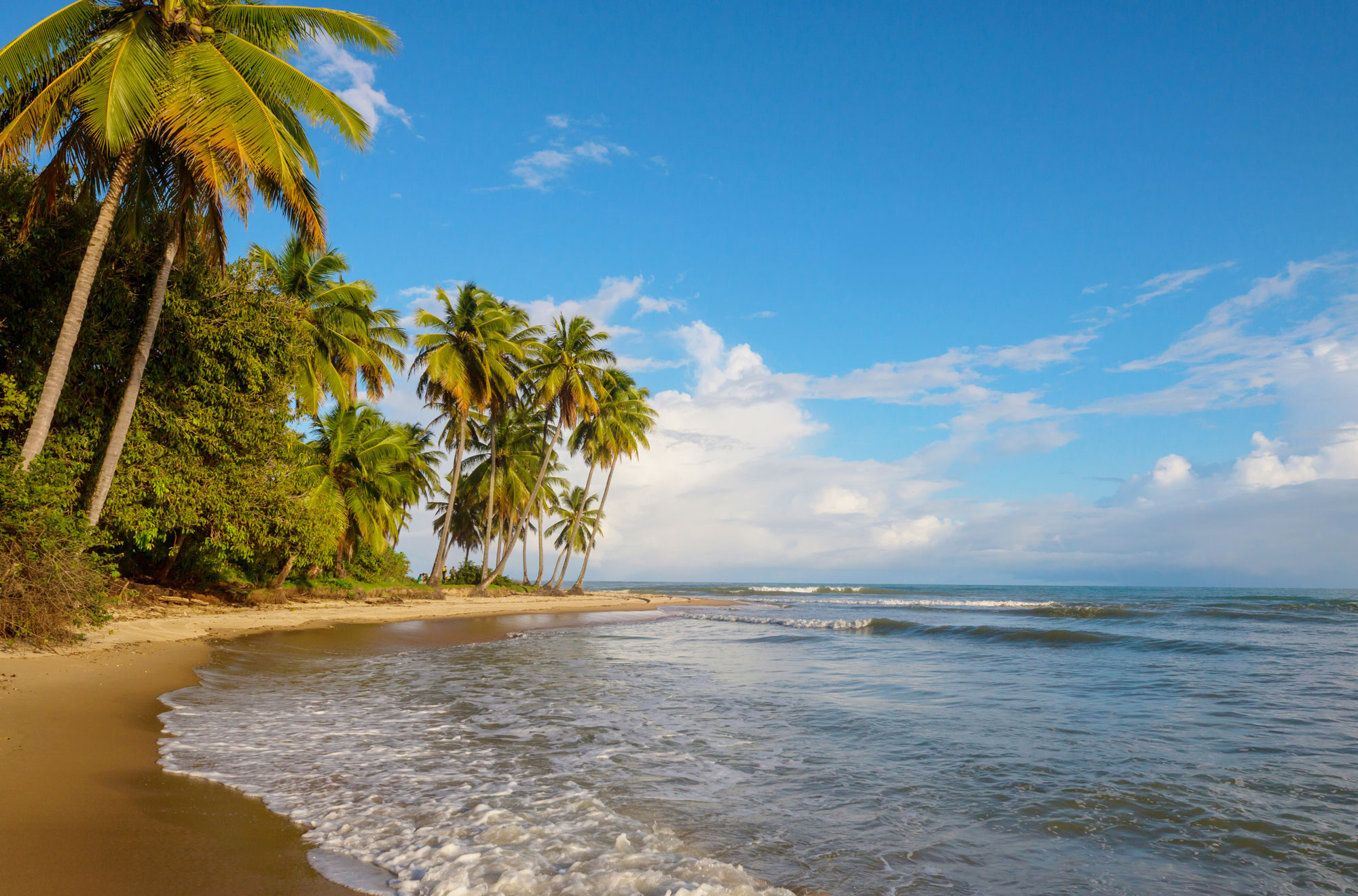
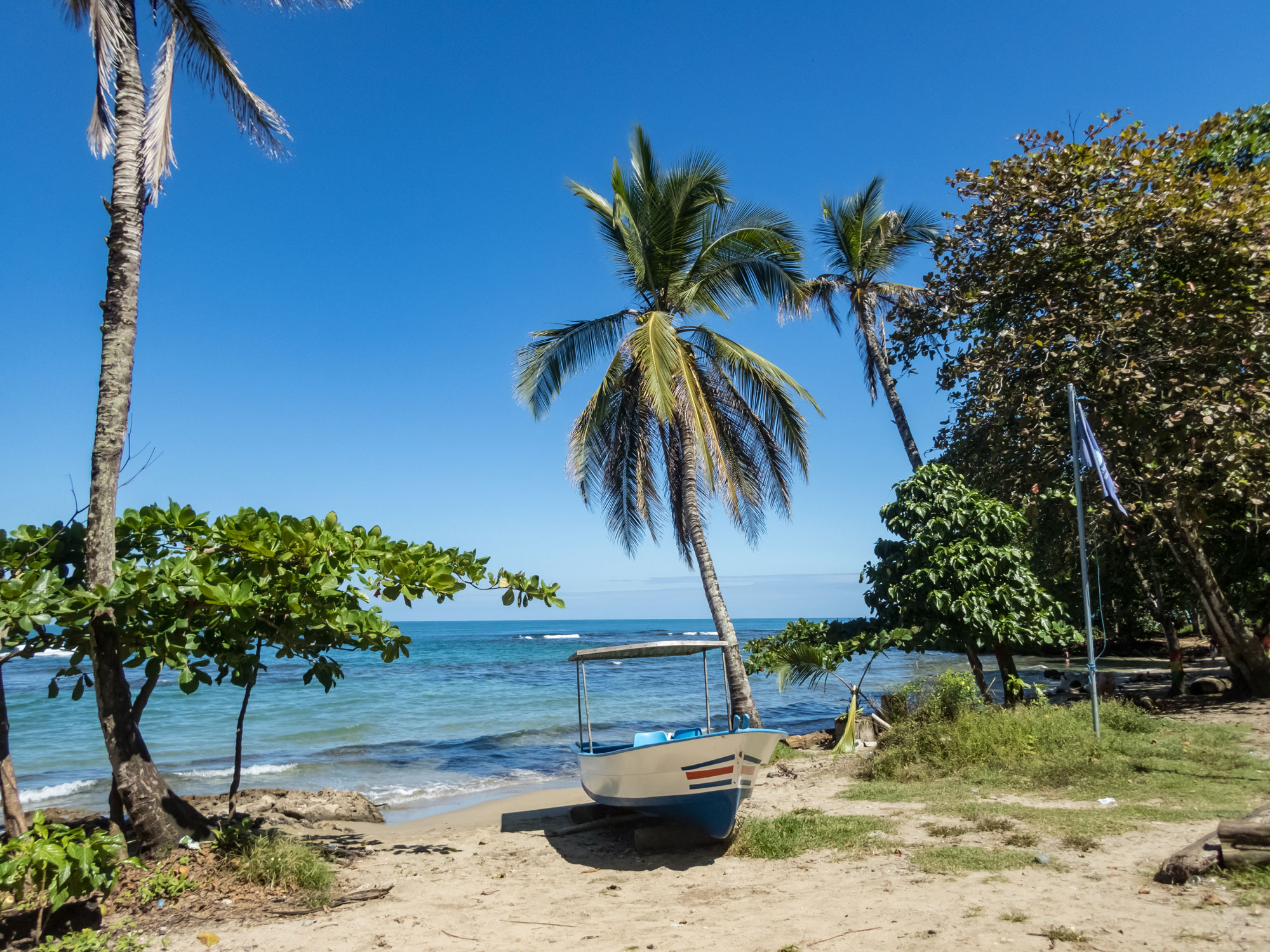
The region's Afro-Caribbean identity shapes daily life, from Limonese Creole spoken alongside Spanish to the music and food of its communities. Rice and beans with coconut milk, rondón, patí and pan bon are part of that tradition, while the corridor between Cahuita and Manzanillo brings forests, wildlife and coastal ecosystems into ordinary experience.
For someone seeking a smaller community and regular contact with nature, that combination can make Puerto Viejo, Cocles, Punta Uva or Manzanillo appealing. Digital nomads, active retirees, and investors considering vacation rentals may find the area suits their plans, provided they are comfortable with its pace and the services available.
The same setting is difficult for someone who needs specialized hospital care nearby, uninterrupted connectivity without a backup, or the infrastructure of a larger suburban community. Those needs deserve as much attention as the beach or the property itself, particularly when moving means selling a home elsewhere.
Infrastructure projects are also influencing interest in the region. Road improvements in Cocles and Cahuita, bridge works in Sixaola and plans for Limón's airport could improve access over time. On the project information reviewed for September 2026, the airport had assigned funds but no published tender, and the marina remained a longer-term prospect.
What does every application require?
Applications are processed through Costa Rica's General Directorate of Immigration and Foreign Nationals, commonly called Migración, under the General Immigration and Foreign Nationals Law, No. 8764. Investor, rentista and pensionado applications share a common documentary base.
- An application form
- A request letter
- A special power of attorney when someone represents the applicant
- The relevant Migración consent form
- The applicable identity documents
- A birth certificate and any other required civil records
- A criminal background certificate
- Consular registration
- Fingerprints taken through the Ministry of Public Security
- Two passport-size photographs
Having the right documents is only part of the preparation. Their issue dates, authentication and translation have to work together so the file can be submitted while the documents remain acceptable.
What is the six-month window for filing and the need for apostille?
The birth certificate, marriage certificate and criminal record must be apostilled, and the vital documents must have been issued within the six months before filing. Costa Rica's General Directorate of Immigration will review the documents have been issued within a six months from their filing date.
Requesting documents one at a time can mean the first document falls outside that window by the time the last document arrives. Coordinating all the documents and their apostilles within the same preparation window avoids repeating the process and paying twice.
Authentication also depends on the issuing country. Apostilles are used for documents covered by the Hague Apostille Convention; documents from other countries may require consular legalization, which is a different process. Confirm the applicable procedure before requesting the records.
Documents in another language need a Spanish translation made by an official translator registered at the Ministry of Foreign Affairs.
How does investor residence through real estate work?
For the real estate threshold, the relevant figure is the value declared before the municipality. Paying more than US$150,000 does not establish that the property meets the requirement.
A buyer could pay US$180,000 for a property in Puerto Viejo while its municipal declaration still records US$90,000. At a US$150,000 qualifying threshold, that property would not meet the declared-value requirement until the declaration is appropriately updated.
This is why the municipal value needs to be checked before closing. Buying first and checking the immigration requirements afterward can leave the owner with additional work and a delay they had not planned for.
How does investor residence through company shares work?
Where several people own the company, the amount attributable to the individual applicant is what counts. A company with US$150,000 in declared capital does not establish that each shareholder has made a US$150,000 investment.
The company must be properly registered with the National Registry, and its capital and ownership records must support the applicant's qualifying investment.
The choice between real estate and shares depends on the investment being made. A home buyer has a straightforward reason to consider the property route, while someone investing in an operating business may find the shares route more appropriate. If the investment is still being structured, the immigration question should be settled alongside the corporate structure rather than afterwards.
What qualifies as rentista income, and what does not?
A letter confirming wages, salary or employment income from a foreign entity does not satisfy the rentista requirement. This is the most common reason a rentista application fails before it starts.
The category requires a passive income of at least US$2,500 per month from the last two years, from dividends in a corporation or as income from a rental property. The corporation or the property can be outside of Costa Rica, that will not generate a negative impact.
Someone earning more than US$2,500 a month from an overseas employer may have sufficient income to live in Costa Rica and still lack the type of financial evidence this category requires. Where that income comes from remote employment, the digital nomad option is usually the better fit.
The category can include a spouse and eligible dependents. Maintaining the qualifying financial arrangement and paying the applicable social security contributions are continuing commitments, so both belong in the relocation budget.
What does the pensionado option require?
At least US$1,000 per month in fixed, permanent, lifetime pension or qualifying retirement income, evidenced by an original or certified letter from the paying institution. It is the lowest financial threshold of the five options.
A qualifying pension received by one spouse can support an application that includes the other spouse, subject to the dependency requirements. That makes the option relevant to couples retiring together even when only one receives the pension used for the application.
The practical difference from the rentista category is the type of evidence. A pension entitlement is documented by the institution that pays it, rather than by maintaining a US$60,000 as passive income. For many retirees that is a simpler position to evidence and to sustain.
Who is the digital nomad option for?
Someone who works remotely for employers or clients outside Costa Rica, with recurring foreign income of at least US$3,000 per month individually or US$4,000 per month for a family application. It carries the lowest professional fees of the five options.
The evidence is bank statements showing the remote income together with a public accountant's certification letter confirming the qualifying income for immigration purposes. The certification letter deserves particular attention, because incomplete certification leads to additional document requests and delays.
The option suits someone who wants to spend time in Costa Rica while maintaining foreign remote income. If the objective is to settle permanently and eventually pursue citizenship, the other options should be considered from the outset because the digital nomad program does not itself establish the same progression toward permanent residency.
There is also a practical point specific to this option. Someone whose income depends on reliable connectivity should test the internet at the property they intend to use, and decide what backup they need, before committing to a move.
Does the digital nomad option require CCSS enrollment?
No. Digital nomads are not required to enroll in the Costa Rican Social Security System, known as the CCSS or the Caja, once the application is approved. This is the clearest practical difference between the digital nomad program and the four temporary residency options, all of which do require enrollment.
Medical insurance is required instead. The policy must provide coverage of at least US$50,000, and it may be issued internationally or in Costa Rica.
What obligations continue after approval?
Four apply to the investor, rentista and pensionado categories: annual presence, the three-year mark for permanent residency, the restriction on local work, and enrollment in the social security system.
1 Applicants should plan to spend at least one day per year in Costa Rica.
2 After three consecutive years of qualifying temporary residence, they can apply for permanent residency, provided they meet the relevant conditions. Reaching three years creates the opportunity to apply; it does not automatically change the person's status.
3 While residence remains temporary, the holder may not work for a Costa Rican employer or practice independently in the country.
4 Enrollment in the Costa Rican Social Security System, known as CCSS or the Caja, is required and is tied to receiving the DIMEX identification card. International private insurance does not replace that enrollment requirement.
The contribution depends on the income declared and assessed for the applicant, so the amount differs between a pensionado and an investor. It is a recurring monthly expense rather than a one-time application charge, and it belongs in any comparison of the overall cost of the options.
What did Law 9996 offer, and does it still apply?
Law 9996 introduced five incentives in 2021 for investors, rentistas and pensionados. Its application window ran from 14 July 2021 to 14 July 2026, so anyone preparing a new application after that date should not assume the package remains available because it appears in an older article.
The five principal benefits were:
1 A one-time exemption from import duties and taxes on household goods, in quantities reasonable and proportionate to the beneficiary's household needs.
2 Exemption from the applicable import taxes on up to two vehicles for personal or family use, including land, air or water transport.
3 Exemption from income tax on the amounts declared as income to obtain the law's benefits.
4 Exemption from 20% of the real estate transfer tax on qualifying purchases where the beneficiary is the registered owner.
5 Exemption from import taxes on qualifying instruments or materials needed for professional or scientific work.
People who opted for the benefits within the applicable window can retain approved benefits for ten years from the date they were granted, subject to the law's conditions. The original application period and the beneficiary's ten-year period are different timelines.
What happens if you leave after taking the benefits?
If the beneficiary renounces the qualifying status or loses it, the taxes previously waived can become payable. Someone who imports two vehicles under the exemption and abandons the qualifying residence three years later may face a substantial tax bill.
The exemptions are therefore conditional rather than free. A relocation budget needs to account for the conditions attached to the saving, particularly where there is a realistic chance the person will leave Costa Rica or change their immigration plans.
What if you are already in Costa Rica as a tourist?
The application to change category must be filed before the authorized period of legal stay expires. For a visitor granted 90 days, that means filing within 90 days of entry.
The authorized period differs between visitors, so the deadline has to be checked against the person's own entry record. Once that period has passed, the case requires individual assessment, because the available procedure may change and the person may need to leave Costa Rica.
Document preparation should therefore begin early enough to avoid reaching the filing deadline with an incomplete application. However, by scheduling an appointment at the Immigration Department the validity of the entry stamp could be extended, without the need of having to leave the country.
How do I choose the option that fits my move?
Start with where the money comes from, not how much of it there is. An amount that exceeds one category's threshold can still fail to qualify if the income or investment does not match that category's requirements.
A lifetime pension points toward the pensionado option. Qualifying stable income backed by a US$60,000 financial arrangement supports rentista residence. Foreign remote employment points toward the digital nomad program. A qualifying Costa Rican investment leads to the investor option corresponding to the asset.
That starting point explains why a salary letter does not satisfy the rentista requirements, and why paying more than US$150,000 for a property does not resolve a municipal declaration recording a lower value.
What are the two most expensive mistakes?
Choosing the category by the amount rather than the origin of the funds, and requesting documents separately could cause documents to fall outside the six-month window by the time the file is ready. Both create costs and delays that coordinated preparation prevents, and both can be resolved before any money is committed.
Before deciding where to live, spend time in Puerto Viejo, Cocles, Punta Uva, Manzanillo and Cahuita with everyday life in mind. Speak to residents, test the services you would depend on, and pay attention to what would make living there difficult as well as what makes it appealing.
While you explore the area, establish where your qualifying income or investment comes from and how you can document it. With those details, the right option and the preparation it requires can be identified before you apply.
---------------------------------------------------------------------------
This article describes general Costa Rican immigration options based on information reviewed as of September 2026. It does not constitute legal advice. Requirements, thresholds, fees and available benefits may change, and each application depends on the applicant's nationality and circumstances.


Disclaimer: The information provided in this resource is for general informational purposes only and is not intended to constitute legal advice. While we strive to ensure the accuracy and timeliness of the content, laws and regulations are subject to change. For the most accurate and up-to-date information, please contact our office directly. Some images may be AI generated.